
 Drain Unblocking
 Drain Cleaning
 CCTV Drain Survey
 Drain Repairs
 Toilet Unblocking
Tree Roots & Older Drains
Why Older Drains in Crownhill
Are More Vulnerable to Tree Root Damage
By Drainblock Services — Drain Unblocking & CCTV Drain Survey Specialists Covering Crownhill, Eggbuckland, Leigham, Estover, Glenholt, Woolwell & North Plymouth
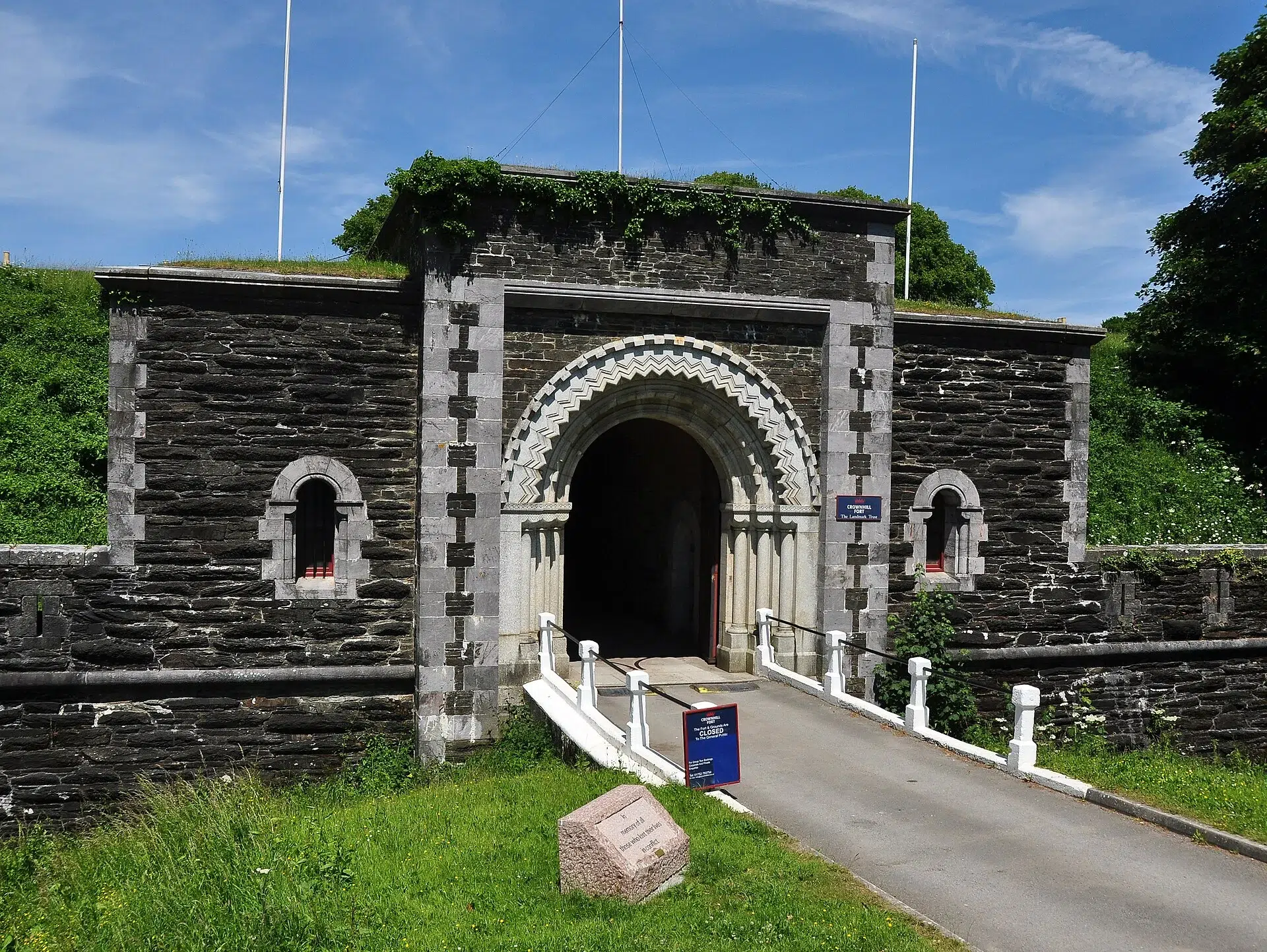
Image credit: Crownhill Fort main entrance by Nilfanion, licensed under CC BY-SA 3.0, via Wikimedia Commons.
Across Crownhill and nearby North Plymouth areas such as Eggbuckland, Leigham, Estover, Glenholt and Woolwell, many properties sit alongside mature trees, older drainage systems, and infrastructure that has evolved over generations.
Parts of Crownhill itself carry a long history of underground engineering. Crownhill Fort, originally built during the Victorian era as part of Plymouth’s defensive ring of military forts, became known for its deep construction, underground rooms, tunnels and hidden passageways beneath the surface. The wider area around Crownhill continued expanding around older infrastructure for decades afterwards, with newer housing, roads, utilities and drainage systems gradually layering over what already existed underground.
That combination can create hidden drainage problems that develop slowly over time.
Why Are Older Drains in Crownhill More Vulnerable?
In many cases, it comes down to ageing pipework and tiny weaknesses underground that homeowners never see until a blockage starts developing.
Tree roots don’t usually break directly into a perfectly sealed drain pipe. Instead, they naturally move towards moisture. Even a very small defect underground can attract them over time. Once roots find a way into a drainage system, they continue growing inside the pipework where moisture is constantly present.
The First Signs Are Often Easy to Dismiss
A toilet may begin draining slower than normal. An outside drain might gurgle after heavy rain. Water may start backing up occasionally before clearing again. Sometimes there’s simply an unpleasant smell near an inspection chamber or kitchen sink that seems to come and go. By that stage, roots may already be spreading through sections of underground pipework.
Decades of Layered, Altered Drainage
Across Crownhill and surrounding North Plymouth areas, many drainage systems have also evolved over decades through extensions, driveway alterations, repairs and redevelopment work. Older clay pipes are sometimes joined to newer materials, creating connection points that can become more vulnerable as the ground naturally shifts over time.

Suburban estates typical of Eggbuckland, Woolwell and North Plymouth — where older, altered drainage runs underground
Once roots enter the system, they begin catching other debris moving through the drains. Grease, wipes, paper, scale build-up and general waste start snagging around the root mass, gradually restricting the flow more and more.

Tree roots growing through a damaged drain pipe — the kind of intrusion that affects older areas such as Crownhill and Estover
That’s why some drains seem to “keep blocking” repeatedly even after they’ve already been cleared once before.
“Once roots find moisture, they don’t stop growing. A tiny gap in a pipe is enough.”
— Roman Hadlow, Drainblock Services
How Weather and Ground Conditions Make It Worse
Heavy rainfall and changing ground conditions can also make the situation worse. During wetter periods, weakened joints and older pipe sections may begin leaking more moisture into surrounding soil. During dry spells, tree roots often search further for water sources underground, increasing the chance of intrusion into damaged drainage systems.
Diagnosing and Repairing Root Damage
In some situations, root cutting and high-pressure drain jetting may solve the problem. In others, a CCTV drain survey reveals displaced joints, cracked pipework, standing water, or deeper structural damage that requires repair or patching and relining.
The earlier the issue is identified, the easier it usually is to prevent more extensive underground damage later on. Across Crownhill, Eggbuckland, Leigham, Estover, Glenholt, Southway and wider North Plymouth areas, Drainblock Services carries out CCTV drain investigations, root intrusion diagnosis, drain unblocking and drainage repairs for both residential and commercial properties.
See the Damage Tree Roots Can Cause
One of the biggest problems with root intrusion is that most homeowners never actually see what’s happening underground until a camera survey is carried out. In this video — Root Ingress Causes Drain Blockage, Plymouth — you can see how tree roots gradually spread through damaged drainage systems, catching debris and restricting flow inside the pipework. What often starts as a small weakness underground can slowly turn into repeated blockages and much larger drainage problems later on.
Root Ingress Causes Drain Blockage — Plymouth
This is also why recurring drain issues should never simply be ignored or temporarily cleared without investigating the underlying cause properly.
You Asked — We Answered
Can tree roots really break into drain pipes?
Yes, but usually not in the dramatic way people imagine. Most of the time, roots enter through existing weak points underground. Older clay pipework, slightly displaced joints, small fractures, or ageing seals can all allow moisture to escape into surrounding soil. Tree roots naturally grow towards that moisture source and gradually work their way into the drainage system over time.
Why do drain problems caused by roots keep coming back?
Because clearing the blockage doesn’t always remove the underlying cause. If roots have already entered the pipework, they often continue growing back unless the damaged section is properly identified and repaired. This is why some homeowners experience repeated slow drainage or recurring blockages even after the drain has already been cleared once before.
Are older properties in Crownhill more at risk?
In many cases, yes. Across Crownhill, Eggbuckland, Leigham and surrounding North Plymouth areas, some drainage systems have evolved over decades through extensions, repairs and redevelopment work. Older sections of underground pipework can become more vulnerable to movement, wear and root intrusion over time.
How do you know if roots are inside a drain?
Many of the warning signs overlap with other blockages. But if you’re seeing repeated blockages, slow-draining sinks or toilets, outside drains overflowing, gurgling sounds, foul smells near drains, or water backing up during heavy rain, a CCTV drain survey is the quickest way to confirm whether roots have entered the system — and to see how serious the damage has become underground.
Can tree root damage always be repaired without digging?
Not always, but many issues can now be repaired with far less excavation than people expect. Depending on the condition of the pipework, solutions may include root cutting, high-pressure jetting, pipe patch repairs, localised excavation or partial drain relining. The earlier the issue is caught, the more repair options there usually are. You can see one of these repairs in action in the video below.
Pipe Patch & Drain Repair, Plymouth (Part 1)
Across North Plymouth areas including Crownhill, Eggbuckland, Estover, Woolwell, Glenholt and Southway, mature trees and older drainage systems can create hidden problems that continue developing long before surface symptoms appear. If your drains keep slowing down, backing up, or repeatedly blocking, it may be time to investigate what’s really happening beneath the surface.
Suspect Tree Roots in Your Crownhill Drains?
Drainblock Services provides CCTV drain surveys, root intrusion investigations, emergency drain unblocking and drainage repairs across Crownhill, Eggbuckland, Leigham, Estover, Glenholt, Woolwell, Southway and surrounding Plymouth areas.
Call Roman: 01752 426224
www.drainblockservices.com
Roman Hadlow, Drainblock Services — drainage engineer specialising in CCTV surveys, root intrusion and no-dig repairs across Plymouth. Content produced with Tish Social.


